↑
  • HAL Typefaces
  • Collection
  • Licensing
  • Notes
  • About
  • Trial Fonts
  • Collection
  • Licensing
  • Notes
  • About
  • Trial Fonts
  • © 2026 HAL Typefaces
  • Newsletter
  • Cookies & Privacy
Four GroteskGapMagicMatexRepostTimezoneColantTwins
  • Timezone
  • Standard
  • Mono
  • Features
  • Glyphs
  • Info
  • In Use

Overview

Timezone Standard
Light Light Italic Book Book Italic
Regular Regular Italic
Medium Medium Italic Bold Bold Italic
Black Black Italic
Timezone Mono
Light Book Regular
Medium Bold Black

Standard

Size
 
Features
Greenwich
Size
 
Features
Meantime

Features

Glyphs

▼Basic Characters
▼Punctuation
▼Oldstyle and Tabular Figures
▼Circled Figures
▼Ligatures
▼Language Extension
▼Cyrillic Characters
▼Small Caps
▼Fractions and Ordinals
▼Currency and Math
▼Arrows and Symbols

Info

Description

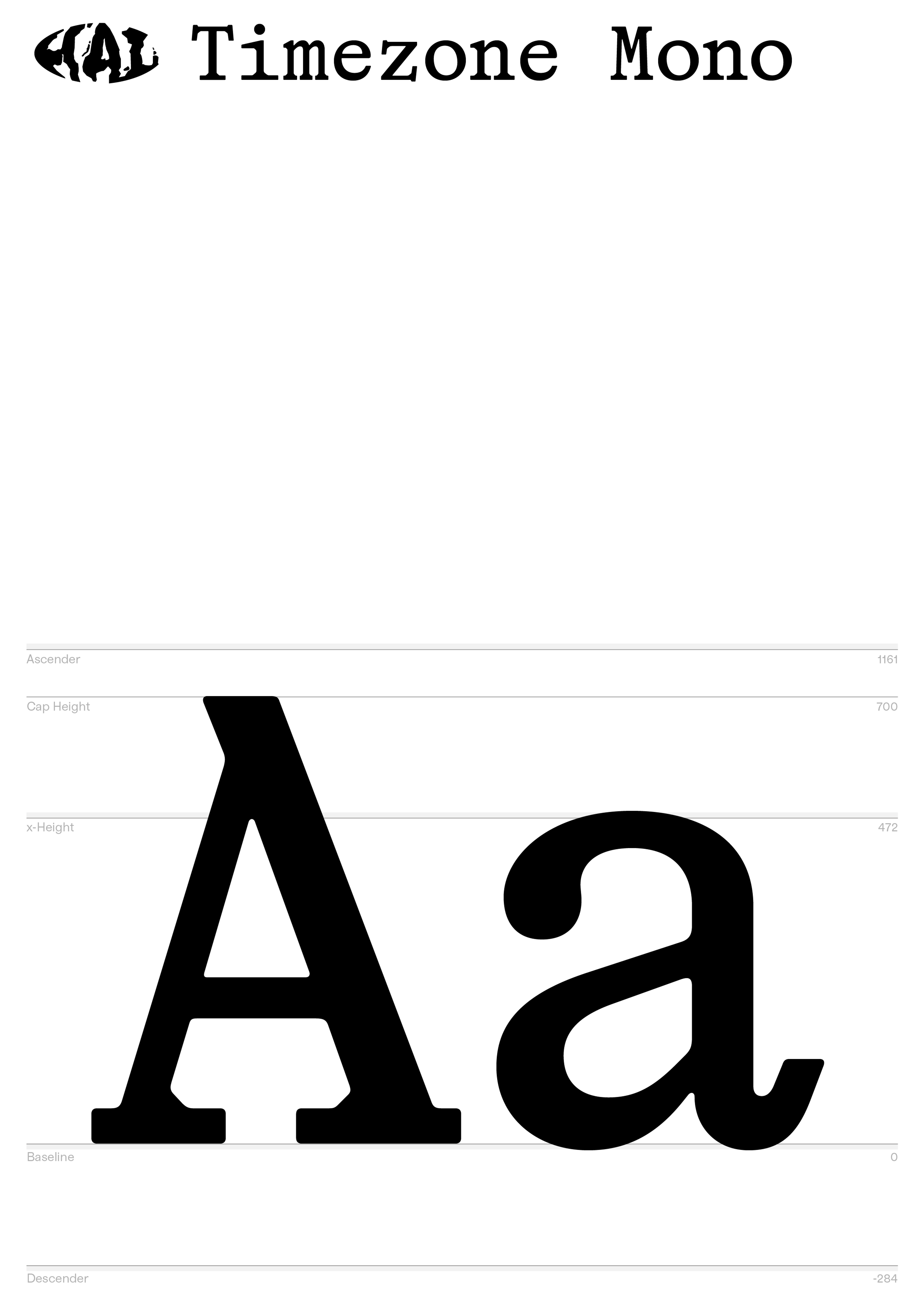
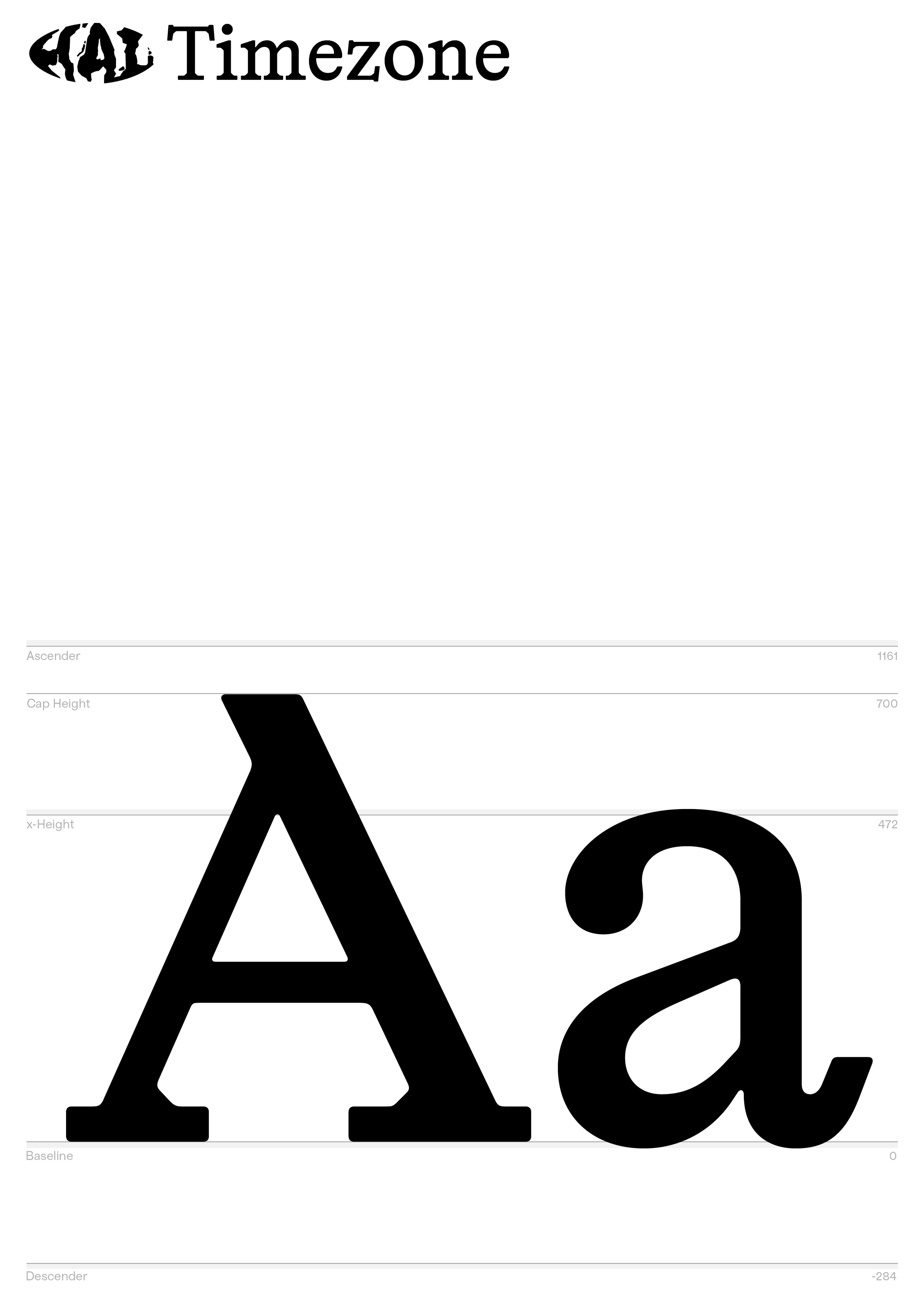
HAL Timezone is a low-contrast, serif typeface, aesthetically inspired by early digital fonts, freshly transitioned from the phototype era. A robust text font with high visibility and slightly rounded edges: the Uprights are sturdy and durable, while the Italics are more playful and dynamic, reminiscent of classical, antique serif faces. The full family spans six weights across 18 styles, including a complementary monospaced subfamily. Covering both Latin and Cyrillic scripts, Timezone also features small caps for all styles and languages, including numerals. No matter the size, task, or altitude: Timezone never sleeps.

Credits

Design: HAL Typefaces
Production: HAL Typefaces with Alex Lescieux
Volume: 2 families, 18 styles
Scripts: Latin, Cyrillic
File Formats: otf, ttf, woff, woff2
Release Year: 2021 (updated 2026)
Spacing/Kerning: Igino Marini

Supported Languages

Abaza, Abron, Abua, Acheron, Achinese, Acholi, Achuar-Shiwiar, Adamawa Fulfulde, Adangme, Adyghe, Afar, Afrikaans, Aghul, Aguaruna, Ahtna, Akoose, Alekano, Aleut, Algonquin, Amahuaca, Amarakaeri, Amis, Anaang, Andaandi, Andi, Angas, Anufo, Anuta, Ao Naga, Apinayé, Arabela, Aragonese, Arbëreshë Albanian, Archi, Arvanitika Albanian, Asháninka, Ashéninka Perené, Asturian, Asu (Tanzania), Atayal, Avaric, Awa-Cuaiquer, Awing, Baatonum, Bafia, Bagirmi Fulfulde, Balante-Ganja, Balinese, Balkan Romani, Bambara, Banjar, Baoulé, Bari, Bashkir, Basque, Bassari, Batak Dairi, Batak Karo, Batak Mandailing, Batak Simalungun, Batak Toba, Belarusian, Bemba (Zambia), Bena (Tanzania), Bezhta, Biali, Bikol, Bini, Bislama, Boko (Benin), Bomu, Bora, Borana-Arsi-Guji Oromo, Borgu Fulfulde, Bosnian, Breton, Budukh, Buginese, Bulgarian, Bushi, Candoshi-Shapra, Caquinte, Caribbean Hindustani, Cashibo-Cacataibo, Cashinahua, Catalan, Cebuano, Central Aymara, Central Kurdish, Central Nahuatl, Central-Eastern Niger Fulfulde, Cerma, Chachi, Chamalal, Chamorro, Chavacano, Chayahuita, Chechen, Chiga, Chiltepec Chinantec, Chinese Buriat, Chokwe, Chuukese, Chuvash, Cimbrian, Cofán, Congo Swahili, Cook Islands Māori, Cornish, Corsican, Creek, Crimean Tatar, Croatian, Czech, Danish, Dargwa, Dehu, Dendi (Benin), Dido, Dimli, Duala, Dungan, Dutch, Dyan, Dyula, Eastern Arrernte, Eastern Maninkakan, Eastern Mari, Eastern Oromo, Efik, Embu, English, Erzya, Ese Ejja, Esperanto, Falam Chin, Fanti, Faroese, Fijian, Filipino, Finnish, French, Friulian, Ga, Gagauz, Galician, Ganda, Garifuna, Ga’anda, German, Gheg Albanian, Gilbertese, Gonja, Gooniyandi, Gourmanchéma, Guadeloupean Creole French, Gusii, Haitian, Hakha Chin, Halh Mongolian, Hani, Hassaniyya, Hausa, Hiligaynon, Ho-Chunk, Hopi, Huastec, Hungarian, Hunzib, Hän, Ibibio, Icelandic, Ido, Idoma, Igbo, Iloko, Inari Sami, Indonesian, Ingush, Interglossa, Interlingua, Interlingue, Irish, Istro Romanian, Italian, Ixcatlán Mazatec, Jamaican Creole English, Javanese, Jenaama Bozo, Jola-Fonyi, Judeo-Tat, K’iche’, Kabardian, Kabuverdianu, Kaingang, Kala Lagaw Ya, Kalaallisut, Kalenjin, Kalmyk, Kamba (Kenya), Kaonde, Kaqchikel, Kara-Kalpak, Karachay-Balkar, Karaim, Karata, Karelian, Kashubian, Kazakh, Kekchí, Kenzi/Mattokki, Khasi, Khinalugh, Kikuyu, Kimbundu, Kinyarwanda, Kirghiz, Kirmanjki, Kituba (DRC), Kom (Cameroon), Komi-Permyak, Komi-Zyrian, Kongo, Konzo, Koyra Chiini Songhay, Koyraboro Senni Songhai, Krio, Krymchak, Kuanyama, Kumyk, Kven Finnish, Kwasio, Kölsch, Ladin, Ladino, Lak, Latgalian, Lezghian, Ligurian, Lingala, Lithuanian, Lojban, Lombard, Low German, Lower Sorbian, Lozi, Luba-Katanga, Luba-Lulua, Lule Sami, Luo (Kenya and Tanzania), Luxembourgish, Maasina Fulfulde, Macedo-Romanian, Macedonian, Madurese, Makhuwa, Makhuwa-Meetto, Makonde, Makwe, Malagasy, Malaysian, Maltese, Mam, Mamara Senoufo, Mandinka, Mandjak, Mankanya, Manx, Maore Comorian, Maori, Mapudungun, Matsés, Mauritian Creole, Mende (Sierra Leone), Meriam Mir, Meru, Meta’, Metlatónoc Mixtec, Mi’kmaq, Minangkabau, Mirandese, Mizo, Moba, Mohawk, Moksha, Mongolian Buriat, Montenegrin, Munsee, Murrinh-Patha, Murui Huitoto, Muslim Tat, Mwani, Ménik, Mískito, Naga Pidgin, Ndonga, Neapolitan, Ngazidja Comorian, Nigerian Fulfulde, Niuean, Nobiin, Nogai, Nomatsiguenga, Noon, North Azerbaijani, North Ndebele, Northern Altai, Northern Kissi, Northern Kurdish, Northern Qiandong Miao, Northern Sami, Northern Uzbek, Northwestern Ojibwa, Norwegian, Novial, Nyamwezi, Nyanja, Nyankole, Nyemba, Nzima, Occitan, Ojitlán Chinantec, Orma, Oroqen, Ossetian, Otuho, Palauan, Paluan, Pampanga, Papantla Totonac, Papiamento, Paraguayan Guaraní, Pedi, Picard, Pichis Ashéninka, Piemontese, Pijin, Pintupi-Luritja, Pipil, Pite Sami, Pohnpeian, Polish, Portuguese, Potawatomi, Pulaar, Purepecha, Páez, Quechua, Romanian, Romansh, Rotokas, Rundi, Russian, Russian Buriat, Rusyn, Rutul, Rwa, Saafi-Saafi, Samburu, Samoan, Sango, Sangu (Tanzania), Saramaccan, Sardinian, Scots, Scottish Gaelic, Sena, Serbian, Seri, Seselwa Creole French, Shambala, Sharanahua, Shawnee, Shilluk, Shipibo-Conibo, Shona, Shor, Shuar, Shughni, Sicilian, Silesian, Slovak, Slovenian, Soga, Somali, Soninke, South Azerbaijani, South Ndebele, Southern Altai, Southern Aymara, Southern Bobo Madaré, Southern Dagaare, Southern Qiandong Miao, Southern Sami, Southern Sotho, Spanish, Sranan Tongo, Standard Estonian, Standard Latvian, Standard Malay, Sundanese, Susu, Swahili, Swati, Swedish, Swiss German, Syenara Senoufo, Tabassaran, Tagalog, Tahitian, Taita, Tajik, Talysh, Tasawaq, Tatar, Tedim Chin, Tetum, Tetun Dili, Timne, Tiv, Tiéyaxo Bozo, Toba, Tok Pisin, Tokelau, Toki Pona, Tonga (Tonga Islands), Tonga (Zambia), Tosk Albanian, Tsakhur, Tsonga, Tswana, Tumbuka, Turkish, Turkmen, Tuvalu, Tuvinian, Twi, Tzeltal, Tzotzil, Uab Meto, Udi, Ukrainian, Umbundu, Ume Sami, Upper Guinea Crioulo, Upper Sorbian, Urum, Venetian, Veps, Vietnamese, Vlax Romani, Volapük, Võro, Waama, Walloon, Walser, Wamey, Wangaaybuwan-Ngiyambaa, Waorani, Waray (Philippines), Warlpiri, Wasa, Wayuu, Welsh, West Central Oromo, West-Central Limba, Western Abnaki, Western Frisian, Western Mari, Western Niger Fulfulde, Wik-Mungkan, Wiradjuri, Wolof, Xavánte, Xhosa, Yagua, Yanesha’, Yangben, Yao, Yapese, Yindjibarndi, Yoruba, Yucateco, Zarma, Zulu, Zuni, Záparo
Typeface in use
PDF Specimen
Timezone
Typeface in use
PDF Specimen
Timezone Mono

In Use

Typeface in use
Typeface in use
Typeface in use
Typeface in use
Typeface in use
Typeface in use
Typeface in use

Poesiefestival Berlin Design by AG Grafik, 2025

Typeface in use
Typeface in use
Typeface in use
Typeface in use
Typeface in use
Typeface in use
Typeface in use

The Imaginary Institution of India. Art 1975–1998, Barbican Daly & Lyon, 2024

Typeface in use
Typeface in use
Typeface in use
Typeface in use
Typeface in use
Typeface in use

Design Academy Eindhoven Graduation Catalogue Design by Pedro Lobo, 2024
Related Notes

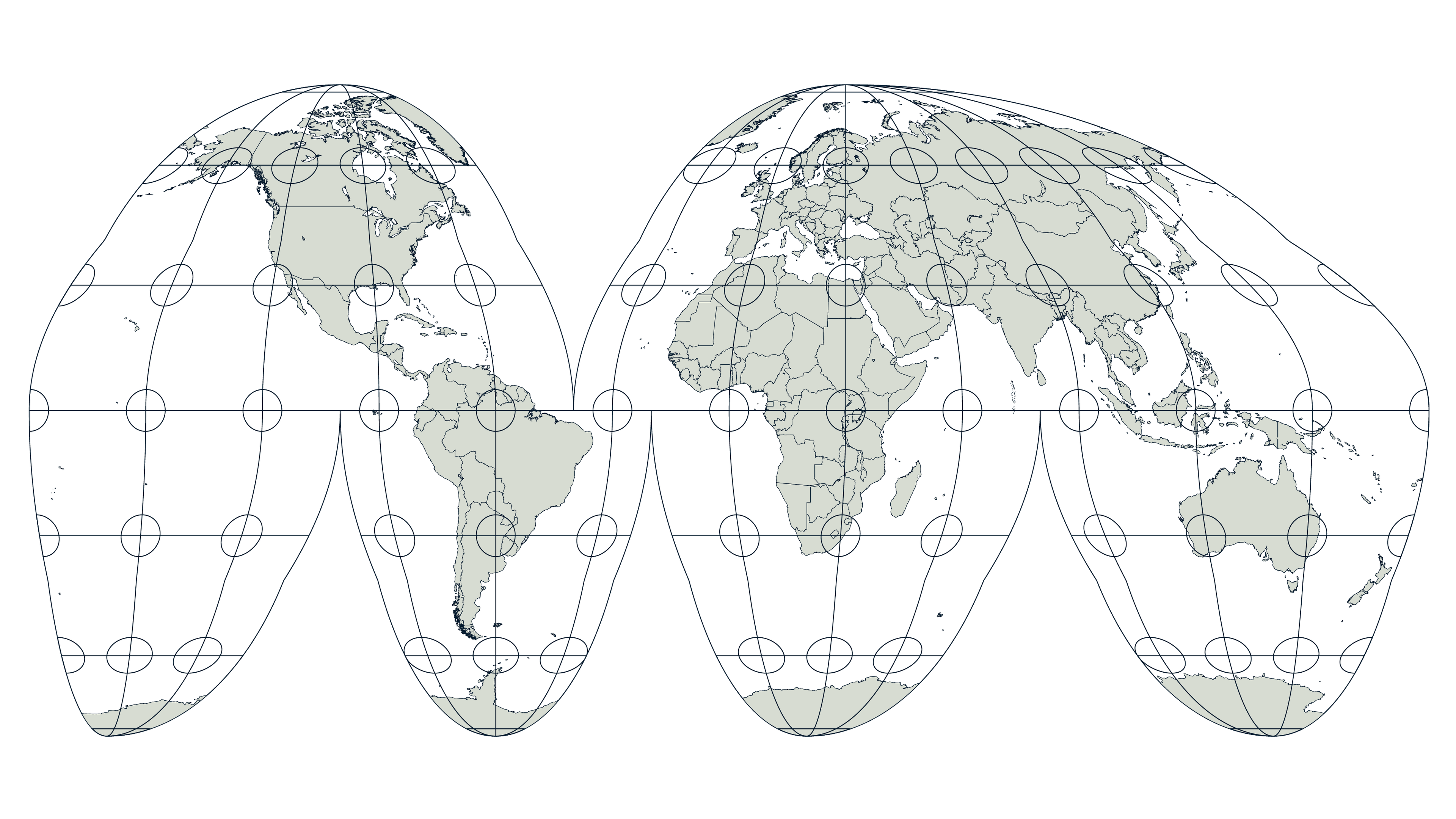
map of the world with timezones
Size
 
Features
The development of railroads led to the emergence of private-sector careers for both blue-collar workers and white-collar workers. Railroading became a lifetime career for young men; women were almost never hired. A typical career path would see a young man hired at age 18 as a shop labourer, be promoted to skilled mechanic at age 24, brakemen at 25, freight conductor at 27, and passenger conductor at age 57. White-collar career paths likewise were delineated: educated young men started in clerical or statistical work and moved up to station agents or bureaucrats at the divisional or central headquarters, acquiring additional knowledge, experience, and human capital at each level. Being very hard to replace, they were virtually guaranteed permanent jobs and provided with insurance and medical care. Hiring, firing, and wage rates were set not by foremen, but by central administrators, to minimize favouritism and personality conflicts. Everything was done by the book, whereby an increasingly complex set of rules dictated to everyone exactly what should be done in every circumstance, and exactly what their rank and pay would be. By the 1880s, career railroaders began retiring, and pension systems were invented for them. Modern rail as economic development indicator: A 2018 study found that the opening of the Beijing Subway caused a reduction in “most of the air pollutants concentrations (PM2.5, PM10, SO2, NO2, and CO) but had little effect on ozone pollution.”
Size
 
Features
Catch My Drift?
Size
 
Features
Central European Standard Time
Size
 
Features
As the United Kingdom developed into an advanced maritime nation, British mariners kept at least one chronometer on GMT to calculate their longitude from the Greenwich meridian,which was considered to have longitude zero degrees, by a convention adopted in the International Meridian Conference of 1884. Synchronisation of the chronometer on GMT did not affect shipboard time, which was still solar time. But this practice, combined with mariners from other nations drawing from Nevil Maskelyne’s method of lunar distances based on observations at Greenwich, led to GMT being used worldwide as a standard time independent of location. Most time zones were based upon GMT, as an offset of a number of hours (and occasionally half or quarter hours) “ahead of GMT” or “behind GMT”. Greenwich Mean Time was adopted across the island of Great Britain by the Railway Clearing House in 1847 and by almost all railway companies by the following year, from which the term railway time is derived. It was gradually adopted for other purposes, but a legal case in 1858 held “local mean time” to be the official time. On 14 May 1880, a letter signed by “Clerk to Justices” appeared in The Times, stating that “Greenwich time is now kept almost throughout England, but it appears that Greenwich time is not legal time. For example, our polling booths were opened, say, at 8 13 and closed at 4 13 p.m.” This was changed later in 1880, when Greenwich Mean Time was legally adopted throughout the island of Great Britain. GMT was adopted in the Isle of Man in 1883, in Jersey in 1898 and in Guernsey in 1913. Ireland adopted GMT in 1916, supplanting Dublin Mean Time. Hourly time signals from Greenwich Observatory were first broadcast by shortwave radio on 5 February 1924 at 17:30:00 UTC, providing a rival accurate time-source to the time ball at the Greenwich Observatory.
Size
 
Features
Jack London
Size
 
Features
18.53 Royal Peacocks Château de Villandry
Size
 
Features
Since 1998, the site has had new life breathed into it through a mix of new uses and activities and a revival of the historic old site under the management and control of the Greenwich Foundation. The buildings are Grade I listed. In 1999 some parts of Queen Mary and King William, and the whole of Queen Anne and the Dreadnought Building were leased for 150 years by the University of Greenwich. In 2000 Trinity College of Music leased the major part of King Charles. This created a unique new educational and cultural mix. In 2002, the Foundation realised its aim of opening up the whole site to visitors. It opened the Painted Hall, the chapel and the grounds and a visitor centre to the public daily, free of charge, with guided tours available. The Old Royal Naval College became open to students and visitors of all ages and nationalities. As Nathaniel Hawthorne wrote in 1863, “the people are sooner or later the legitimate inheritors of whatever beauty kings and queens create”. In 2005, the room where Nelson’s coffin was held prior to his being laid-in-state was opened as the Nelson Room. The little side room contains a statue of Nelson replicating the one in Trafalgar Square, memorabilia, paintings and information. It can be seen on one of the guided tours that also include a visit to the undercrofts, the old skittle alley and crypt. A service is held in the chapel every Sunday at 11 am which is open to all. Public concerts are held here and a variety of business and cultural events are held in the Painted Hall. The area is used by visitors, students, local people and film crews in a traffic-free environment that provides coffee shops, bars and restaurants, all incorporated within the old buildings, as part of an “ancient and modern” blend that support 21st century life in Greenwich.
Size
 
Features
National Meridian Conference of 1784
Size
 
Features
Angular Velocity in Elliptical, Synchronised Orbit & Tilt
Size
 
Features
Modern Era
Size
 
Features
Nation Building Railroad Pits Electricity Unit

Mono

Size
 
Features
Atlantic
Size
 
Features
A Conscious Experience of the 4th Dimension
Size
 
Features
Many ancient cultures, particularly in the East, had a cyclical view of time. In these traditions, time was often seen as a recurring pattern of ages or cycles, where events and phenomena repeated themselves in a predictable manner. One of the most famous examples of this concept is found in Hindu philosophy, where time is depicted as a wheel called the “Kalachakra” or “Wheel of Time.” According to this belief, the universe undergoes endless cycles of creation, preservation, and destruction. Similarly, in other ancient cultures such as those of the Mayans, Aztecs, and Chinese, there were also beliefs in cyclical time, often associated with astronomical observations and calendars. These cultures developed complex systems to track time, seasons, and celestial movements, reflecting their understanding of cyclical patterns in nature and the universe. The cyclical view of time contrasts with the linear concept of time more common in Western thought, where time is seen as progressing in a straight line from past to future without repetition.
Size
 
Features
J.M.E. McTaggart’s Newspaper article »The Unreality of Time«
Size
 
Features
Earth Day
Size
 
Features
Liverpool ca. 1594, Бічна вулиця Прескота East & Country Park

Sign Up to the HAL Newsletter

Bird running with a letterBird running with a letter
Bird holding a letterBird holding a letter